Government Transparency
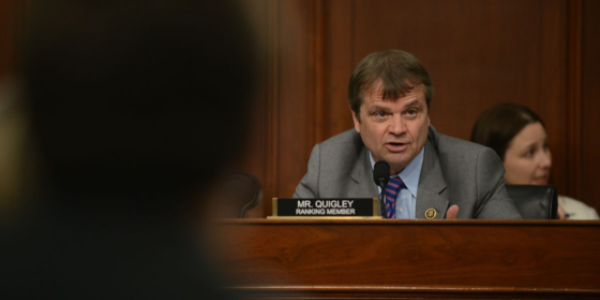
Today, U.S. Representative Mike Quigley (IL-05), a member of the House Appropriations Committee, released a statement on his intention to vote against House Republicans’ year-long continuing resolution unless certain conditions are met. Quigley demanded the firing of Elon Musk, the disbandment of the Department of Government Efficiency, and the restoration of cuts, in addition to calling for a bipartisan, Congressional effort to make government more efficient.
Quigley’s statement is below:


Dear Friend,
This was the first full week of the 119th Congress and I'm as dedicated to standing up for you as ever. Here is some of what I did on your behalf in Washington, D.C. this week.
1. Called for an Arab-led peacekeeping force in Gaza
Dear Friend,
I know that many of you have been navigating a range of emotions over the past few weeks. Whether you've felt moments of excitement or waves of sadness, I want to assure you that my commitment to working on your behalf remains stronger than ever.
1. Reaffirmed My Commitment to Working for You
Today, U.S. Representative Mike Quigley (IL-05) co-founder and co-chair of the Congressional Transparency Caucus, re-introduced the Transparency in Government Act to increase access, accountability, and transparency in every branch of the federal government. The legislation would expand financial disclosure requirements for both lawmakers and lobbyists; modernize how the public accesses federal spending information; and improve judicial transparency. Quigley has introduced this legislation each Congress since his first term.
Today, U.S. Representative Mike Quigley (IL-05), a member of the first Donald Trump impeachment panel, released a statement following Speaker Kevin McCarthy’s announcement of his intention to launch an impeachment inquiry into President Joe Biden on allegations founded in conspiracy theories:
“Today, Speaker McCarthy once again caved to the demands of his most extreme members.
Today, U.S. Representatives Mike Quigley (D-IL-05), founder of the Congressional Transparency Caucus, and Darin LaHood (R-IL-16), a member of the House Permanent Select Committee on Intelligence, introduced the Classified Documents Accountability Act, to implement stronger enforcement for mishandling of classified documents. Currently, criminal penalties for mishandling classified documents must meet a high standard for prosecution.
Today, U.S. Representative Mike Quigley (D-IL), founder of the Congressional Transparency Caucus, re-introduced two bills aimed at lifting the veil from government business and restoring the full trust and faith of the American people in the office of the presidency.
Today, U.S. Representatives Mike Quigley (D-IL-05) and Darin LaHood (R-IL-16), members of the House Permanent Select Committee on Intelligence, announced that they are exploring and intend to introduce legislation to implement stronger enforcement for mishandling of classified documents. Currently, criminal penalties for mishandling classified documents must meet a high standard for prosecution. Quigley and LaHood plan to introduce civil penalties for violations that do not meet that high criminal standard.